Thursday, 1 September 2011

Buttermere Fells - High Crag to Red Pike

This is the second half of a circular walk which I made with Claire that started and finished at Gatesgarth Farm. You can read about the first half of the walk here.

Having walked to the summit of Haystacks it was time to tackle the High Stile ridge starting with High Crag. The ascent of High Crag is a challenge right from the outset.

High Crag and Seat

It starts off with a pleasant enough clamber up the hill called Seat, but you are conscious of the giant face of High Crag that faces you, and each person that you pass warns of the section of scree towards the top.

the steep path ahead
Whilst the climb up is a hard enough slog, stumbling up over the scree is real hard work. With the impending views the main consolation you just have to get your head down and keep going. I found this as hard going as the Ladder on the side of Ingleborough.

High Crag with Ennerdale Water in the distance

It's a pleasure to be off the scree and onto the large summit of High Crag. Fantastic views all around, over Buttermere and Crummock Water and great views out over Ennerdale and northwards to the Vale of Keswick and the North Western Fells beyond. To the west was the obvious path that would take us onwards.

looking from High Crag to High Stile

From here it was an easy walk along the ridge to High Stile, and it didn't take long to get there. We would have stopped a bit more often on this stretch to enjoy the views but pesky insects meant we pressed on.

Red Crag and Bleaberry Tarn

A quick stop to enjoy the view and we carried on along the ridge, finally heading downwards towards Red Pike. Again this was easy and pleasant walking, with the views way beyond Crummock Water being new to these eyes - lots more walking territory to be discovered and explored.

Red Crag and it's obvious why

The descent from Red Pike was really tough. Right off the summit you have to make your way down a bad scree slope, basically stumbling your way down and doing your best not to roll all the way down to Bleaberry Tarn. After quite a lot of walking this was hard work, and meant we didn't enjoy the views as much as we otherwise would have done.


The descent continued past Bleaberry Tarn and into woodland before coming out on the edge of Lake Buttermere, where I couldn't resist giving my hands and face a good wash and cool down.

spectacular view across Buttermere

The return walk along the shore of the lake is a fantastic walk in itself, with great views of the fells on the opposite shore as well as seeing where the walk started out as you walk with Fleetwith Pike directly ahead of you and the Honister Pass snaking its way into the distance. You join the long path that comes down from Haystacks at Janet's Bridge and from there it is a short walk across fields back to Gatesgarth Farm. Fantastic day out!

Fleetwith Pike viewed across Buttermere

Friday, 26 August 2011

Buttermere Fells - Fleetwith Pike to Haystacks

Here is part one of a walk Claire and I undertook recently tackling some of the fabulous fells that tower over Buttermere. Part two coming very soon.

Fleetwith Pike from the farm
This grand tour of Buttermere took us from Gatesgarth farm over five fells before returning via the scenic Lake shore. This ended up being a much harder walk than I expected, with three steep slopes to contend with and a lot of scree to slide up and down. Getting to the fells is an adventure in itself, at times driving in first gear around some of the corners of the Newlands Pass. We managed to grab the last parking space at Gatesgarth Farm and we were soon on our way.


memorial cross to Fanny Mercer
The ascent of Fleetwith Pike starts as it means to go on - straight up and not let up until the summit. There is no half a mile of gentle ascent here, you start right off on the steep path upwards, following the ridge of the fell.

looking back down Fleetwith Edge
It isn't until the last minute that you actually see the top of the fell, there being 3 other false summits on the way to the top. At times the ridge gets very narrow offering impressive sheer drops on either side.

looking back over Buttermere from the first false summit

But the walk is a real pleasure as every time you stop for breath you can turn around and enjoy the Buttermere panorama as it opens up.

Haystacks from the walk up Fleetwith Pike

As you gain height you draw level with the summit of Haystacks and this gives the confidence to push on. A few short scrambles are necessary but they are good natured ones.


Soon enough you find yourself on the summit plain, which comes entirely unexpected when you approach from the Buttermere side.

Haystacks and a distant Pillar from Fleetwith Pike summit
From here it is a nice walk over to Haystacks. You also have a great view of some of the highest peaks of Lakeland with the Scafell massif looming beyond Great Gable.

Great Gable andh the distant Scafell range

Heading down the south of Fleetwith Pike for Dubs Quarry you descend a few hundred feet coming to cross Warnscale Beck. The walk starts going back up as you start on the approach to Haystacks.

old mining buildings at Dubs Quarry
Having already walked up Haystacks a couple of years ago once this became familiar territory as we passed some familiar scenery. The walk is very varied and interesting as you swing back and forth behind crags, at times having views ofver the majestic fells of Great Gable, Kirk Fell and Pillar, before coming round Green Crag and moving to the fromt face of the crags for a short section offering great views from the head of Buttermere.

Green and Great Gable rising behind Innominate Tarn
You pass Blackbeck tarn and shortly before reaching the summit you reach Innominate Tarn, Wainwright's final resting place. A brief pause to enjoy the atmosphere and takin in the views over the water to the giants of the Western Fells and a few minutes later we were on the ridge that is the summit of Haystacks. A great place to be.

Haystacks summit

From here the walk took us upwards towards High Rise - to be continued next week....

Thursday, 18 August 2011

Castle Crag

Castle Crag is a perfect little fell. It looks like a real fell albeit in miniature - it is after all the smallest of the 214 Wainwright fells. However it packs quite a punch and it's diminutive stature is deceptive of the fact that the fell has a lot to offer. Caves, woodland, history, views, slate, rocky outcrops, it can all be found on Castle Crag.

passing the summit of High Spy on our way to Castle Crag

Our walk up Castle Crag came after we had done a section of the Newlands Horseshoe, taking in Catbells, Maiden Moor and High Spy. After nearly a week of tough walking it's fair to say that at this point my feet were a wreck, but as they say, the show must go on, and there was still time left and fells to be climbed, so I had no choice but to carry on.


It is quite a steep climb down from High Spy, bringing you down off the fell tops and into Borrowdale. You pass a lot of evidence of former quarrying and mining and it is always amazing to find ruined buildings in the most out of the way spots that you wonder just how someone actually built these places?


The lower section of Castle Crag crosses pastures and more woodland before giving way to the slate slopes. This is a tough little section with the path zig-zagging its way through sheaves of slate.


Just around the corner from the slate path, there is a hidden gem. There is an odd little sculpture park to be seen here, with piles of slate creating quite a visual effect.


The final trek up to the summit goes round a large crater before reaching the grassy knoll at the top complete with summit crag and memorial plaque.


We came back down by the same path as our ascent, before heading down towards Borrowdale, along the path between Castle Crag and the Newlands Fells before reaching the pastures that accompany the River Derwent, before arriving in the little hamlet of Grange for a well earnt drink and a tasty slice of tea bread.

butterfly spotted on the side of the path

Thursday, 11 August 2011

Catbells to Keswick

Following on from my recent post about my Catbells walk had me thinking about all the great lower level walks that I have done in the Lakes. There's no denying the sensational views and feeling of achievement when you reach the top of a fell especially a new one, but I have also done some fabulous low level walks in the Lakes and here's one of them.

Keswick seen across Derwentwater from Catbells

Staying at the Camping Barn at Skelgill is a great place to get away from it all, even if you are without private transport. One time I didn't enjoy this walk though was when the bus driver chose to ignore me and crag rat Rainer not to mention our excessive luggage that we had to drag back with us on the four miles to Keswick in the baking sun.

the view from Catbells camping barn

But on normal occasion this is a delight in either direction - well worth getting a Keswick launch across Derwentwater, then walking back or vice versa. The walk starts off through fields and woodland with the slopes of Catbells in your back as you head towards the little hill of Swinside.

Swinside

This is of course home to the pub where we have spent several evenings enjoying ales - the Swinside Inn. Along the walk you have glimpses of some of the North Western Fells - Barrow and Causey Pike both loom nearby. The woodland walk through Swinside is very pleasant with a good path that takes you towards Portinscale. After a while you emerge from the woods and walk along the road a short while, passing the Nichol End Marine.

messing about on the lake

We have rented kayaks there on a number of occasions, always fun messing about on the water, especially when your feet are begging you to have a day off the fellwalking.If only we were any good at kayaking it would have been even more fun, as it was we were all excellent at going round in circles and Rainer even got to go for a swim in the Lake!

Portinscale
You continue through the pretty village of Portinscale, passing in front of the Derwentwater hotel, then over the swing bridge. The path goes through some more meadows as Keswick appears before you, with the Skiddaw fells providing the impressive background. You come out of the field and onto the road opposite the Pencil Museum which brings you into the heart of Keswick.

the Skiddaw range as seen on the way to Keswick

Thursday, 4 August 2011

More Local Ales

The beauty of Ales is that they are always in season. Nothing beats a Winter Ale to warm you up on those dark cold nights, and likewise there is something infinitely refreshing about a nice Ale in a pub garden on a sunny Summer evening.

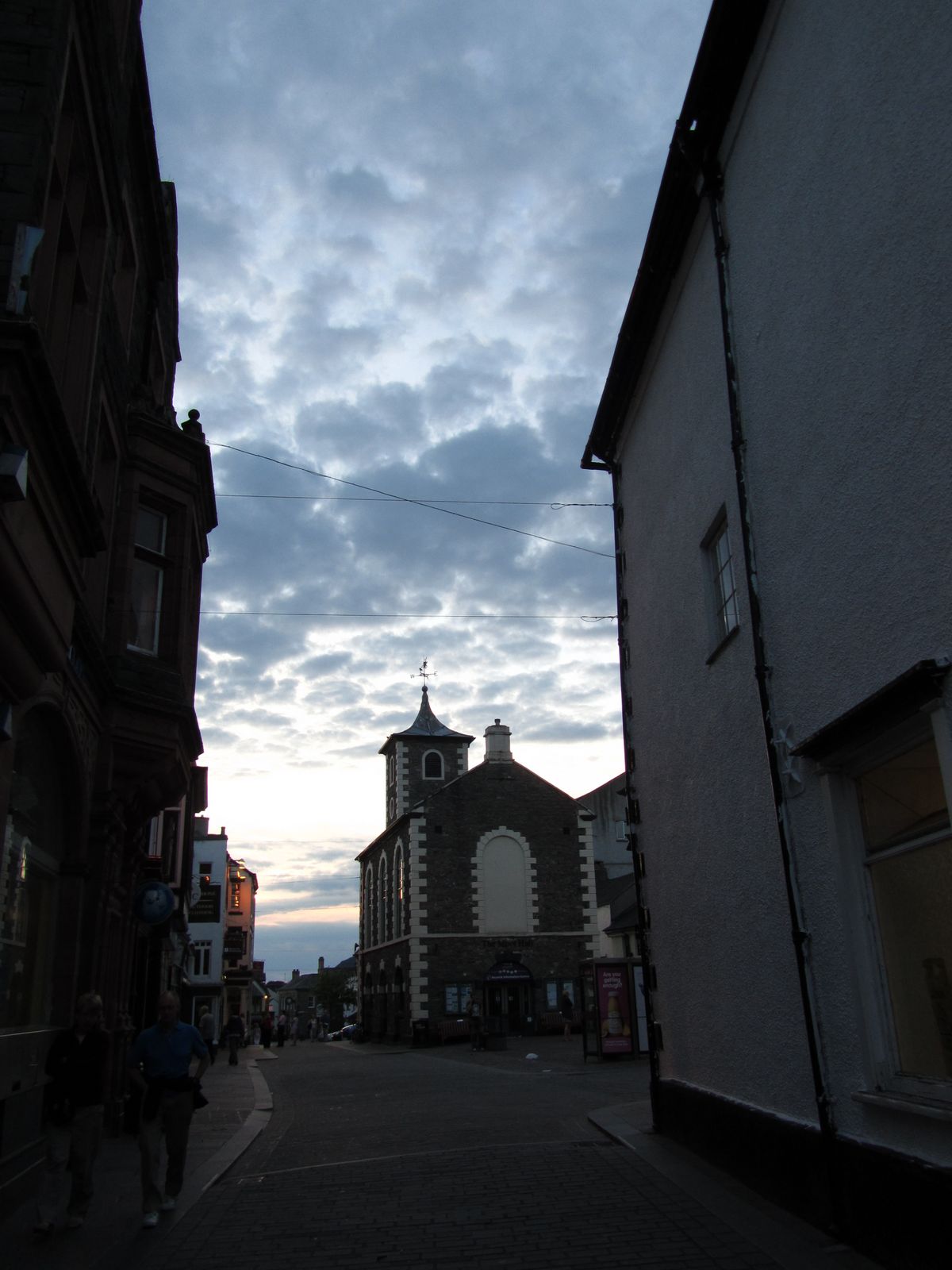
Moot Hall, Keswick, from outside the Dog & Gun
On a recent break to Keswick I got to try some great beers from the Keswick Brewing Company and Yates in the Dog & Gun pub in Keswick. This is a great pub with loads of local real ales on tap. It was a bit disappointing to learn that the kitchen had closed, just after 8pm! Chef fancied a night on the town perhaps? Regardless this is a great pub for beers and chatting with walkers, as well as being fully kitted out for guests with their four legged friends, dog friendly is the word.


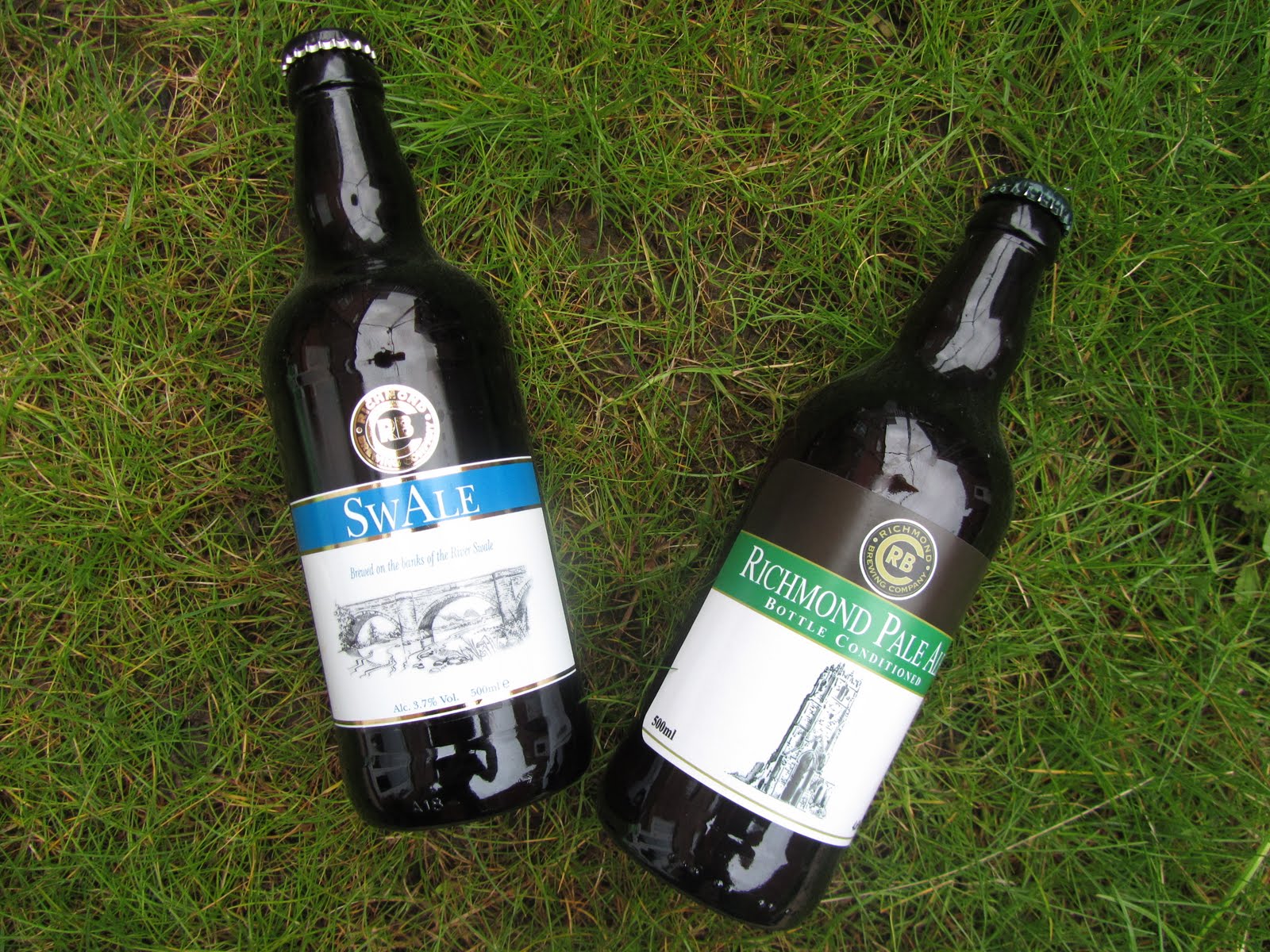
Some other great Summery ales I tried recently were some more local beers brewed by the Richmond Brewing Company here at the Station in Richmond.


I love the design of their bottles, the use of local places and history in the naming of the beers and of course most of all the great taste. Summer was made for Ales like these.

Thursday, 28 July 2011

High Force

Whilst on our way to show visiting relatives some hot spots of the Dales we decided on the spur of the moment to shift our attention to the North Pennines and headed over through Middleton-in-Teesdale over to High Force. This is always a spectacular spot especially combined with joining the Pennine Way for a mile or two of pleasant walking.


Having parked up at the High Force hotel, we avoided the tourist route to the viewing platform, following a steep footpath down through the woods that brings you out onto a pasture on the banks of the Tees. The scent of wild garlic was still there at a couple of spots, last time I was there the woodland floor was covered.


This is a little paradise for rabbits, we saw large groups of them playing in the grass. We crossed the river at the footbridge to join the Pennine Way on the other side of the river.


This is a lovely walk in itself, the well maintained path flanked by numerous juniper and blackberry bushes. As the path climbed, the sound of the falls got louder and after a short climb we found our way to the viewing area. High Force is always a bit of a showstopper and even when you know what to expect it is still a spectacular sight. We paused here for a while to take pictures and enjoy the atmosphere.


From here it is a short walk upwards until you reach the top of the falls, and can see the water cascading down past you over the layers of rock that make up the unique rock face.


The river above the falls is rugged and it is a great view looking upstream towards Cronkley Fell. It isn't too far from here up to Cauldron Snout and Cow Green reservoir which i visited early in the year.


With the usual time constraints we headed back the way we came, leaving the other walks to be had in the area for another time.

Thursday, 21 July 2011

Ruins and Rivers - Easby and Egglestone Abbeys

Driving around the region takes you by countless remnants of times gone by - ruined castles at Richmond, Barnard Castle and Brough, former mining buildings such as Crackpot Hall up in Swaledale and collapsed buildings such as the lavishly named Ravock Castle high on Bowes Moor. There is also plenty evidence of monastic life remaining and I recently explored a couple of these sites - Egglestone Abbey near Barnard Castle and Easby Abbey near Richmond.


Both are ruined Premonstratensian Abbeys, founded in the 12th Century. The monks wore white habits and became to be know as White Canons, living a lifestyle similar to that of Cistercian monks. Within 15 miles of each other, the two abbeys were to suffer a similar fate. Ultimately brought to closure and abandonment by Henry VIII's dissolution, they also both suffered heavily from Scottish raids as well as at the hands of the English army.

Today both sites are managed by the English Heritage.

Egglestone Abbey church

I made an unscheduled visit to Egglestone Abbey, whilst on the way to High Force. The site lays on the Teesdale Way and there was no shortage of walkers passing. I think before long I will be doing a section of this walk heading from here to Cotherstone via Barnard Castle - watch this space...


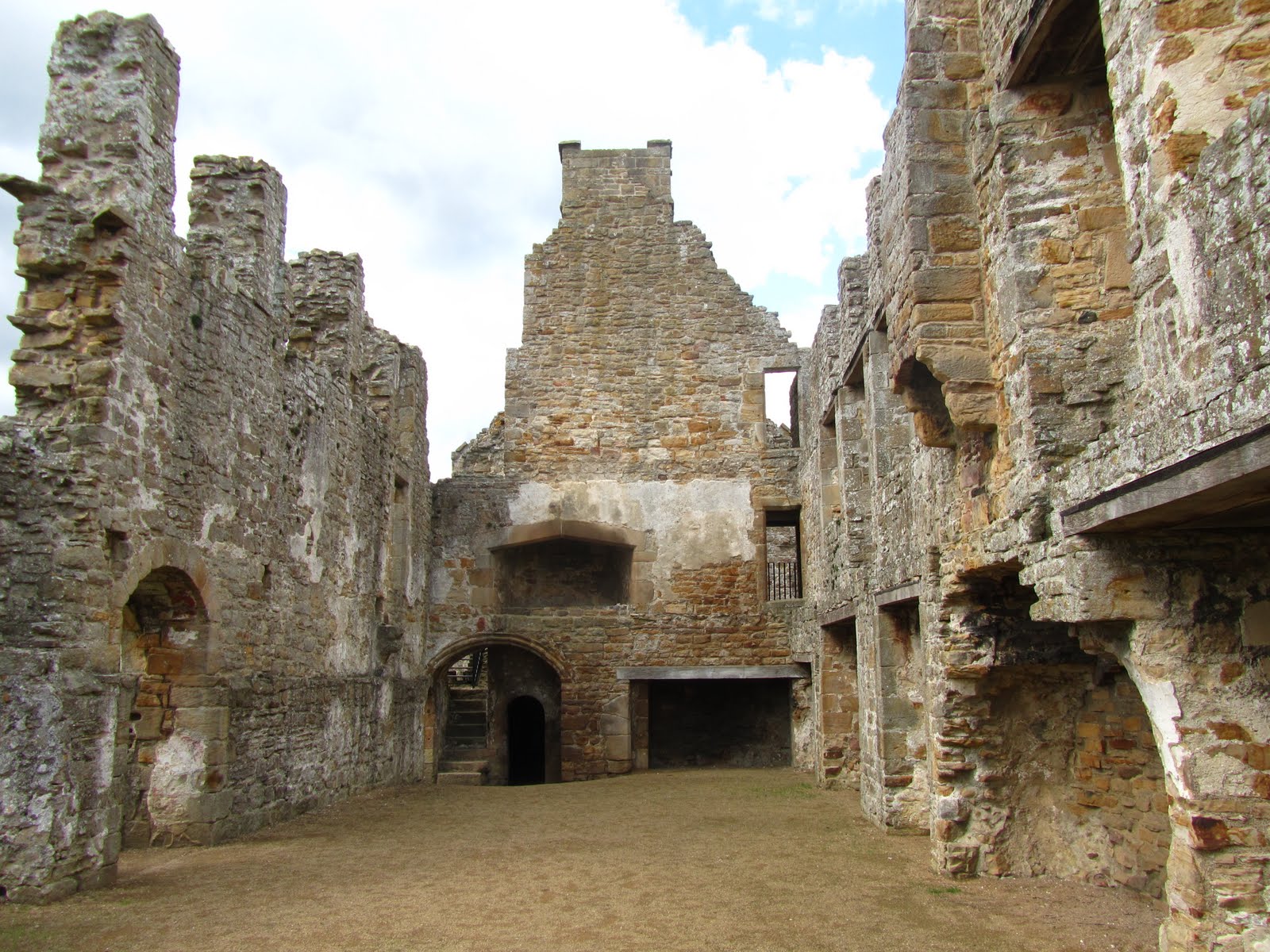
Egglestone Abbey occupies a great spot, a short distance from the southern bank of the Tees, nestled between hills and fields. The ruins are fairly spectacular and it is amazing how much of the stonework has survived. The site is well preserved with a number of graves and tombstones still intact and some stonework on the ground giving you an impression of how the buildings might once have been.

Egglestone Abbey dayrooms with dormitory above

Leaving the Tees, we now head over to Swaledale and Easby Abbey, just outside of Richmond.


Having visited Easby Abbey a few years ago, it was a pleasant surprise to find that there were many new information boards dotted around the site explaining what all the buildings originally were.


You can do a very pleasant circular walk from Richmond, I started at the station and followed the footpath along the old railway line for a mile or so. This takes you along rural Richmond, and shortly you catch glimpses of Easby Abbey between the trees to your left. Coming up to the river Swale you may have to hold your nose for a short distance as you go past the sewage works - depending on the direction the wind is blowing...this is one of the few moments that having a blocked nose worked to my advantage.


You get a great view of the river from the bridge before following a woodland path for the remaining distance to Easby, coming out of the woods just before St. Agatha's Church church and with the Abbey nestled behind the church. It is a huge site, and must have been very impressive when it was standing. You can walk all around the site and as I mentioned there is a lot of information available.


The return section of the walk goes through a field before rejoining the woodland path along the river, coming into Richmond passing the Drummer Boy Stone. You can read about the legend of the drummer boy here.
This is a very enjoyable walk with a good variety of things to see and visit in a few short miles.

the Drummer Boy Stone